
Mermaid Tears: The Folklore and History of Sea Glass
A legend retold, and a dive into the past

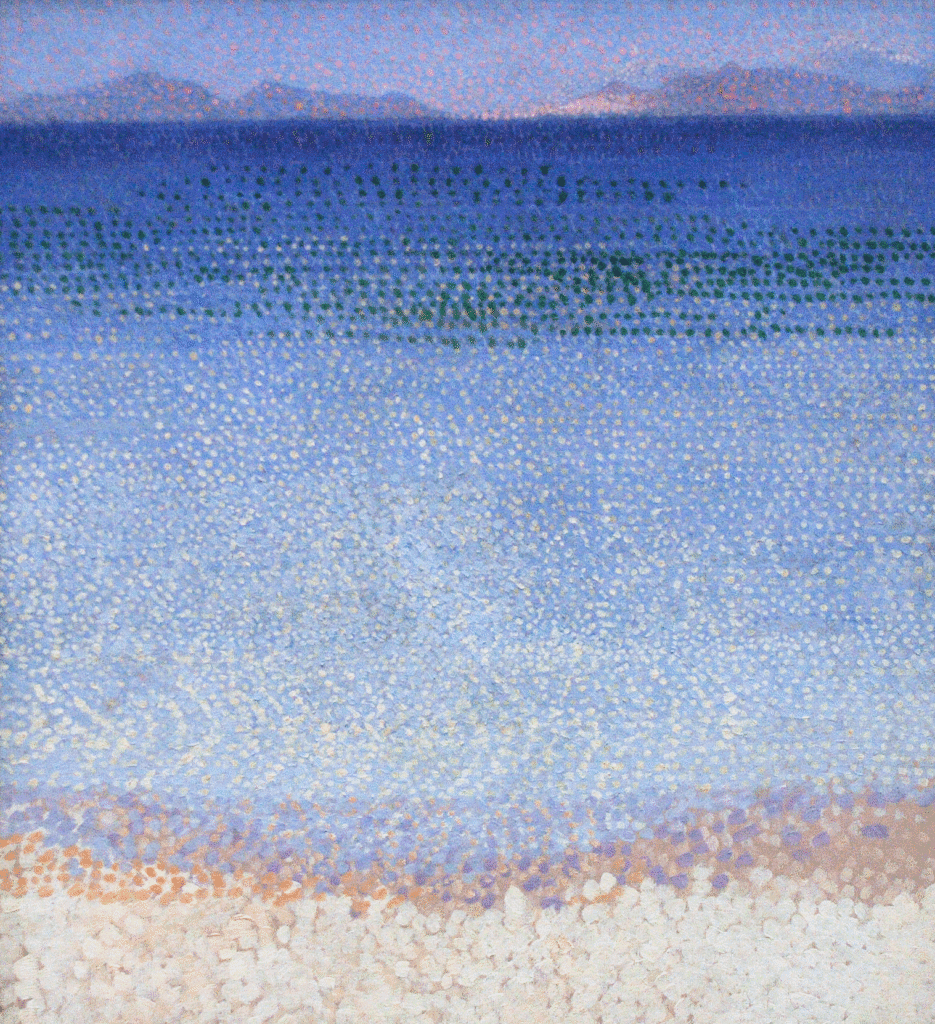
In the fairy tale The Little Mermaid, Hans Christian Andersen wrote that “a mermaid has no tears, and therefore she suffers so much more.”
But if folklore is to be believed, mermaids do have tears — and some beachcombers have the shimmering evidence to prove it, thanks to the tides that carry these beautiful teardrops to shore.
Although tales of mermaids often spell doom for the sailors that they lure to the ocean’s depths, many other stories tell of fish-tailed maidens who rescue men lost at sea, falling in love with them and bringing them to safety.
This is one such story: the tale of the mermaid’s tears…
The legend retold
There was once a mermaid who loved the captain of a ship, a sailor whom she had watched over and pined for since he was a young man on his first voyage at sea. She often traveled the seas in the wake of his great sailing ship, that she might glimpse his face and steer the crew away from rocks and storms with the aid of gentle mischief and bits of siren-song.
Though she could have lured him to the arms of the sea with her voice alone, the mermaid knew he couldn’t live in her world anymore than she could live in the blue heaven up above. Instead, the mermaid contented herself with watching from afar, and keeping the ship safe.
Perhaps Poseidon was jealous of the mermaid’s pure love for her captain, however, because one day, when the ship was far from port, an ill wind began to blow. Without warning, the clear sky was overtaken by dark clouds, the waves darkened and pitched to towering heights, and suddenly the captain and his crew were plunged into a ferocious storm.
From the cold, tumbling waves, the mermaid watched fearfully as the captain clung to the ship’s wheel, bravely trying to steer against the storm. A monstrous wave rose against the ship, crashing down on the deck with a crack like thunder— and sweeping the captain into the sea.
No! thought the mermaid, diving through the white-capped waves. Like a swordfish, her shimmering tail cut through the water, and in a moment she found him. She lifted the captain’s head above the waves, and saw that he was half-dazed. Lightning split the sky, illuminating the ship’s broken mast.
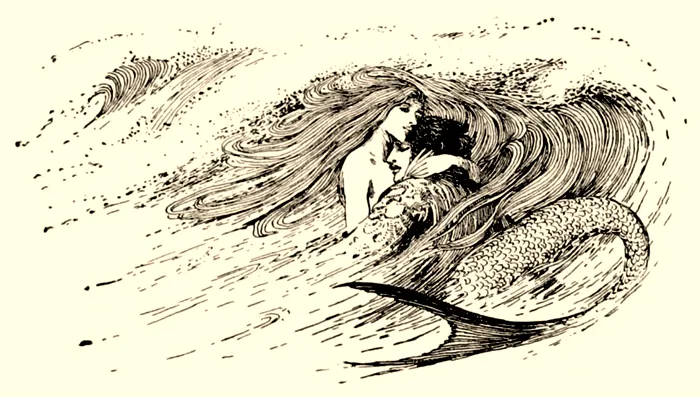
There was only one thing the mermaid could do, and she would pay an unfathomable price — but it would save him, and his crew.
With one final look at the captain’s face, the mermaid lifted her voice against the wind: a song without words, stranger than any siren’s call, and as piercing as a shaft of light. The sound of the song crashed against the waves, and the winds suddenly fell, the sea grew calm, and the sun broke through the clouds.
When the amazed crew pulled their captain from the water, he said again and again that he had been saved by a mermaid, the same mermaid whose singing he had heard floating over the waves for years.
But the mermaid was nowhere to be seen. For the moment that the last note of her song was sung, she was transported, in a swirl of sea foam, to the court of Poseidon in the deep sea.
Poseidon, the god of the sea, charged the mermaid with the use of sea nymph’s magic to quell the storm — an act forbidden to anyone but the sea king himself, for he alone was allowed to rule the waves and the tides.
For such a grave trespass against the laws of the sea, the mermaid was banished to the deepest, darkest part of the ocean.
There, in the fathoms far, far below, the mermaid wept great tears that shone like jewels: the same cascade of colors as the scales on her shimmering tail.
These precious tears sparkled in the darkness, and fish, taking pity on the mermaid, carried them to the shores above that they might be tokens of her love — and that perhaps her captain might see them, and think of his mysterious heroine from the sea.
The history of sea glass
Just like the slightly-opaque surface of these ocean-polished stones, it’s not clear when or where this legend about sea glass began to be told.
However, we do know something about where sea glass comes from — at least, the ones that aren’t mermaid tears.
Man-made glass was invented about 4,000 years ago, and the close relationship of humans and the ocean meant that it likely wasn’t long after its creation that some of these objects fell into the sea and broke. Over many years, the tumbling of the waves polished these fragments, smoothing their sharp edges, and the abrasive sand and the acidity of seawater gave the pieces a frosted appearance.
This was the birth of sea glass, but as humans continued to experiment with glass-making techniques and explored the oceans of the world, sea glass would also continue to evolve.
As the Age of Exploration gave way to the Industrial Revolution and beyond, sea glass became most common near old, bustling ports where pirates and merchants brought goods from all around the world, and at stretches of the sea where people would routinely dispose of trash.
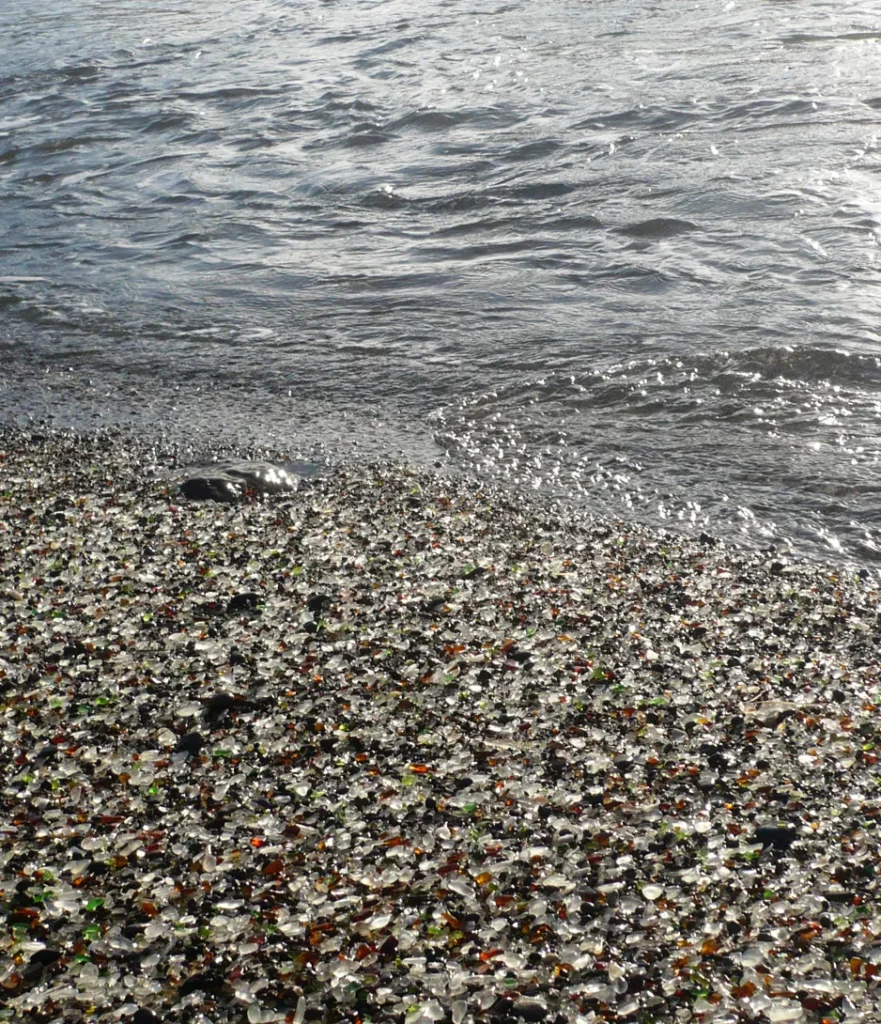
Although it is surprising today, it was once common for seaside cities to dump trash into the ocean as a way to get rid of it — a practice that resulted in the glittering Glass Beach of Fort Bragg, California, where it is a crime to collect the sea glass.

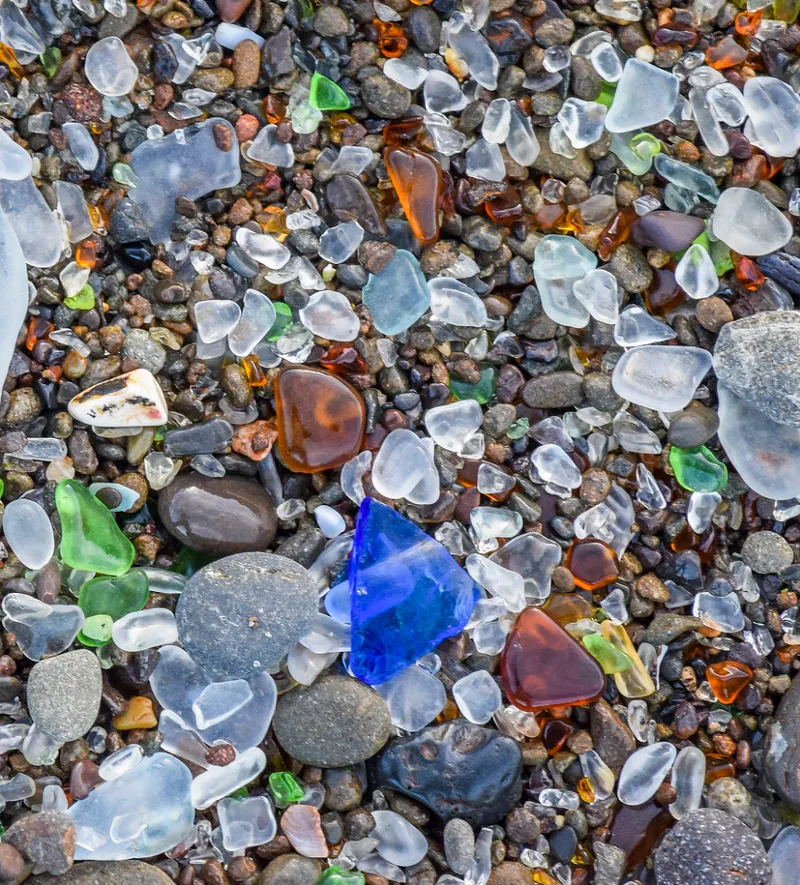
The most common colors of sea glass are green and brown from old soda and beer bottles, but thanks to the wide variety of glass containers and components in the 19th and 20th centuries, a rainbow of sea glass can be found.
The rarest color is orange, which on average is discovered once for every ten thousand pieces of sea glass found.
Pirate glass, which appears black, only reveals its true color and nature when held up to the light: the dark olive green of a centuries-old rum bottle.
Looking for sea glass has long been a popular activity for beachcombers, but on many beaches, you may need a keen eye. With the rise of plastic packaging, sea glass is becoming rarer and harder to find. Sadly, litter in the sea is now far more likely to be toxic fragments of petroleum-based polymers than shimmering pieces of glass.
Perhaps Hans Christian Andersen was right when he wrote that a mermaid suffers more without tears.
But for now, when you’re walking at the beach, keep your eyes open for a soft gleam or sparkle nestled in the sand: it might be a mermaid’s tear, a symbol of self-sacrifice and love.
And if you find one on a day that you’re cleaning up the beach, it just might be a tear of gratitude, too.


